

After reviewing thousands of tech packs over 13 years, we have seen exactly what separates a smooth production run from an expensive sampling disaster.
A common misconception among many people who are new to the industry is that they may think that making a piece of clothing is simple and a photo is all that’s needed.
A good tech pack is the difference between nailing your first sample and spending months in revision cycles. Here’s everything your clothing brand needs to know and how we handle it when you don’t have one.
What is a tech pack & why is it important?
A tech pack, short for technical package, is the complete specification document your clothing manufacturer needs to produce your garment. Think of it as a blueprint and a contract rolled into one: it tells the factory exactly what to make, how to make it, and what materials to use, leaving nothing open to interpretation. It also serves as central point of reference for everyone involved in getting the sample made.
Without a tech pack, production becomes a guessing game. Manufacturers fill in the blanks themselves, and the blanks they fill in are rarely the ones you’d have chosen. The result is samples that miss the mark, extra revision rounds, longer lead times, and costs that quietly compound.
A well-structured tech pack eliminates that ambiguity. Every detail from the stitch type on your inseam to the exact Pantone reference for your artworks decoration is documented and agreed upon before a single metre of fabric is cut.
A detailed tech pack with full material specs also streamlines the manufacturing process by:
- Faster quotes: We can price your order without going back and forth to confirm materials and measurements.
- Accurate costing: Fabric, trims, and lead times estimated from real specs, not assumptions.
- Better advice: We can flag construction issues or suggest material alternatives before sampling starts, not after.
At Bryden, we won’t proceed to sampling without one. Not because we’re difficult, it’s because we’ve seen too many times what happens when we do.
What does a tech pack include?
A complete apparel tech pack has eight core components. Most brands get the first two or three right and skip the rest. That’s where problems start.
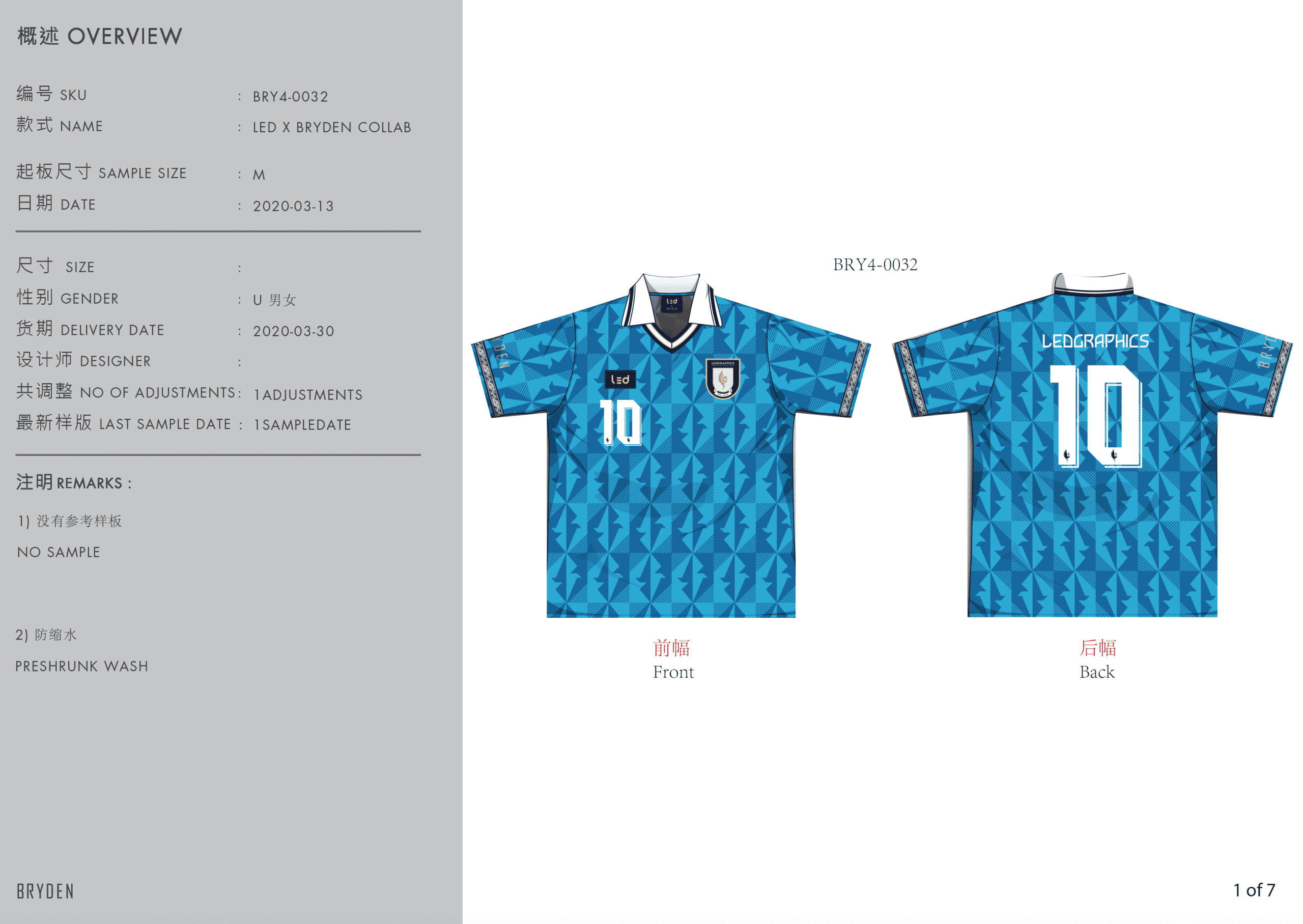
1. Flat sketches and technical drawings

Clean, vector-format drawings of your garment from the front, back, and side. These aren’t mood-board illustrations, they’re technical drawings with every seam, stitch line, closure, pocket, and detail clearly annotated. If a factory can’t understand the construction from the sketch alone, the sketch needs to be redone.
What we see brands get wrong: Sending photos of reference garments or hand-drawn sketches and expecting the factory to interpret the construction and start sampling. A photo doesn’t tell us your seam allowance, your stitch count, or how your pocket bag is attached. Flat technical sketches tell us a better story of how the design should look.
2. Bill of materials (BOM)
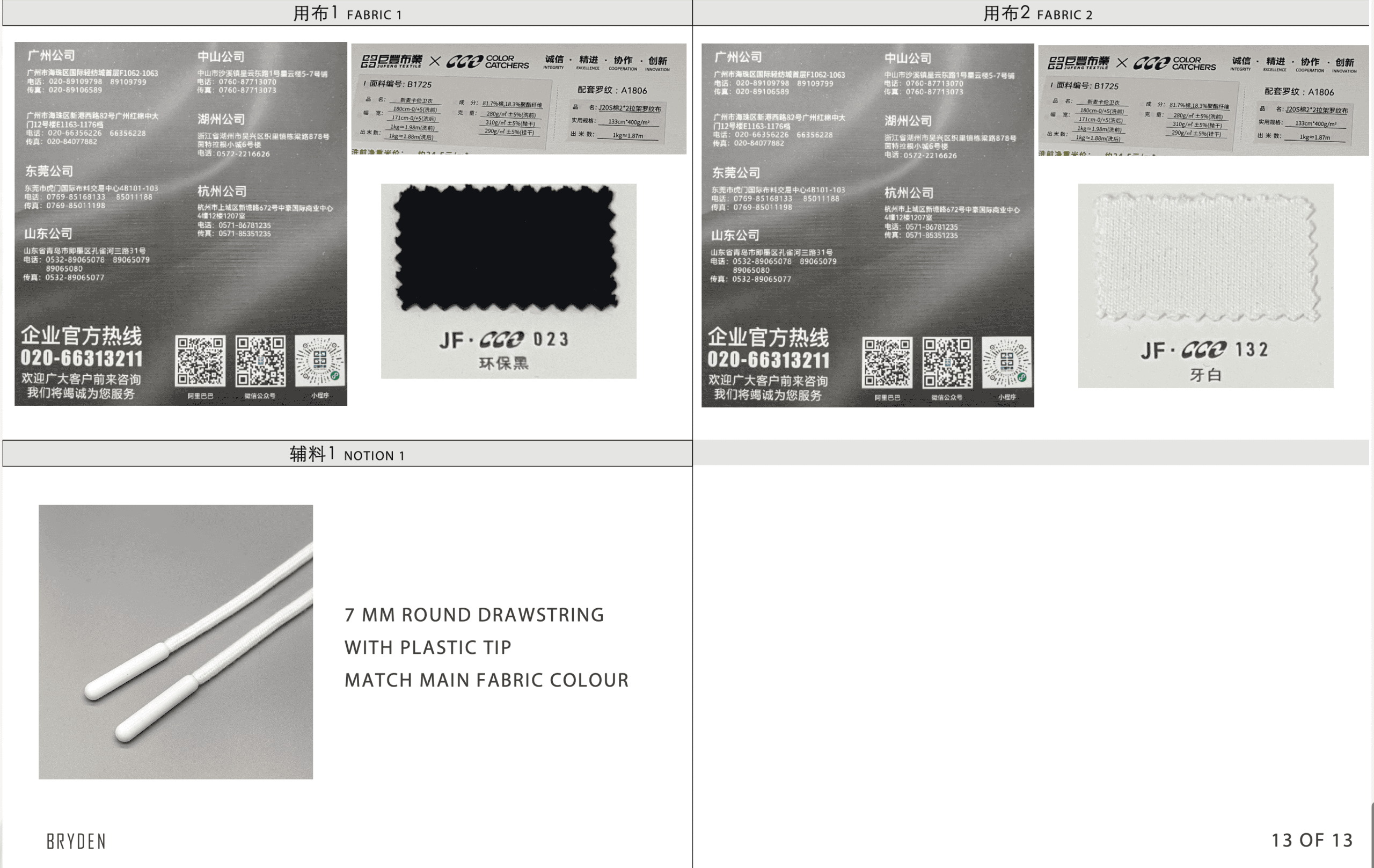
A complete, prioritised list of every component that goes into the garment: main fabric (with fibre content, weight in GSM, weave structure), lining, interfacing, thread colour, zipper brand and specification, buttons, drawcords, eyelets, labels, hang tags, and packaging materials.
What we see brands get wrong: Listing “cotton fabric” without specifying 180GSM, 100% ringspun combed cotton, jersey knit. That description could be ten different fabrics. Every item in your BOM needs a full spec, fibre content, weight, supplier code if you have it, and a reference image or swatch wherever possible.
If you are unsure of fabric types, you can always ask your factory for advice and send them picture of the type of fabrics / or styles so they can try to advise you.
3. Colourways
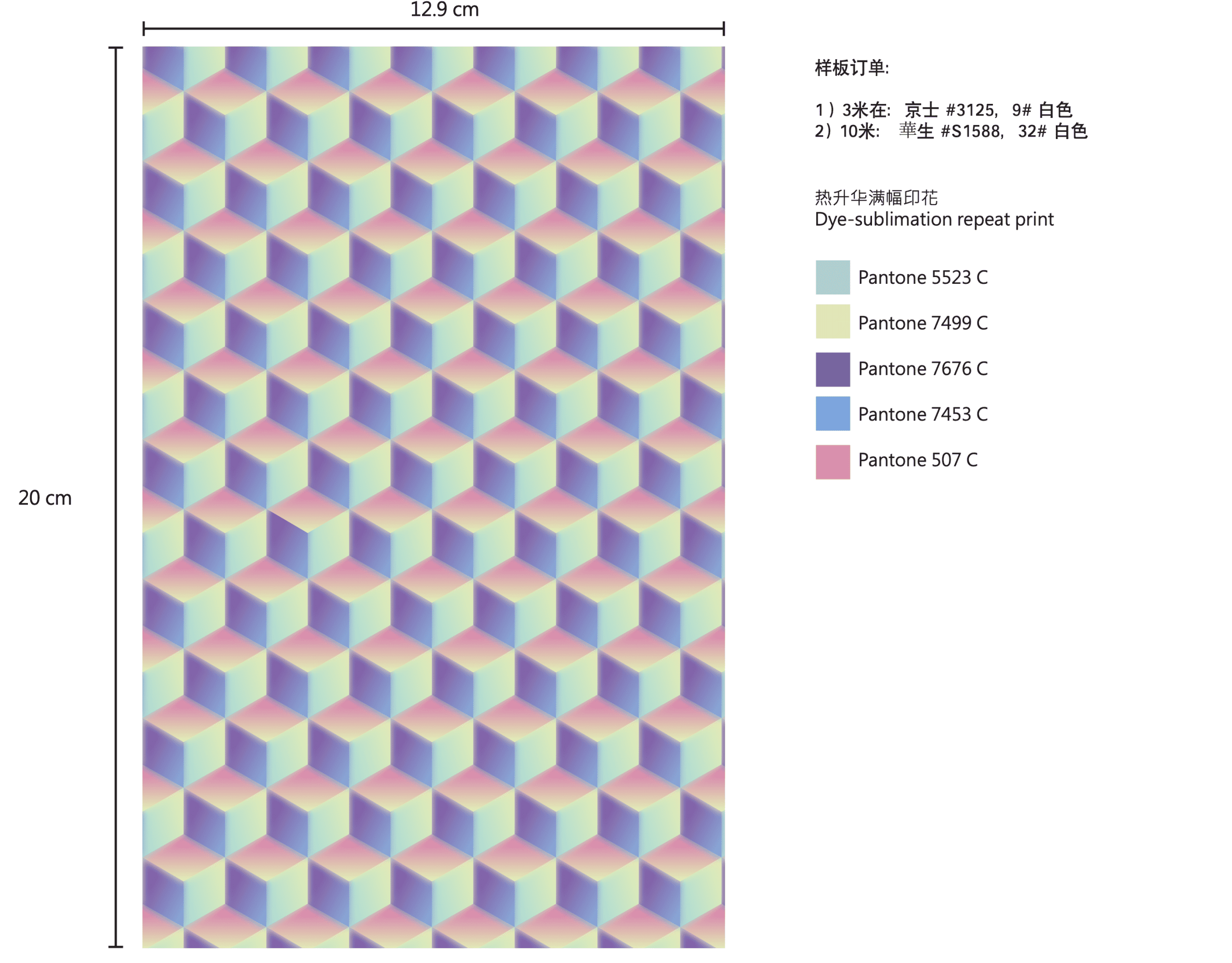
Each colour variation of the garment documented with the exact Pantone Coated (Pantone C) reference, a HEX code for digital reference, and the specific application for that colour (shell fabric, contrast stitching, lining, print, label). If your colourways have names like “Slate”, “Wren”, “Bone”, document both the name and the Pantone. Side note: Most garment factories do not have pantone textile cards (TCX or TPG) as they are expensive and typically use pantone coated for colour reference for fabric and print colours.
What we see brands get wrong: Sending a JPEG of the colour and asking the factory to match it. Screen colours are not fabric colours. A monitor’s “navy blue” and a factory’s “navy blue” can be completely different shades. Pantone references are the universal language, use them.
4. Measurement specification sheet (spec sheet)

Precise garment measurements for every size in your range, graded from your base size. Points of measure (POMs) cover every relevant dimension: chest width, body length, sleeve length, shoulder width, armhole circumference, hem width, and any detail-specific measurements like pocket placement or zipper length.
Each measurement needs a manufacturing tolerance, typically ±0.5cm to ±1cm depending on the POM that defines acceptable variance in bulk production. Without manufacturing tolerances, you have no grounds to reject out-of-spec units.
Manufacturing tolerances are allowable size variances that account for:
- Fabric instability – materials stretch, shrink, and shift during the manufacturing process
- Human handling – manual production stages naturally introduce minor variation
- Practicality & cost – zero-defect uniformity in mass production is not possible and wasteful
- QC & legal clarity – define what’s defective vs. acceptable, reducing disputes
- Raw material variation – natural fibers differ in density and behaviour, which affect the way they behave when being sewn & hold their shape during the manufacturing process
What we see brands get wrong: Providing measurements without stating it’s in cm or inches , using inconsistent measuring points or grading rules across sizes, or omitting tolerances entirely. We work in centimetres (cm) as standard and grade from a base size which is the size the sample will be made in, so specify your base size measurements clearly.
5. Construction and sewing details
Instructions for how the garment is assembled: stitch type (e.g. 401 chainstitch, 516 mock safety), seam allowance, seam finish (flat-felled, overlocked, bound), reinforcement points (bar tacks at pocket corners, stress points on straps), hem method, and any special construction techniques your design requires.
This section is especially important for technical garments, activewear, or any design that deviates from standard construction. If you want French seams on a shirt or a specific flatlock finish on activewear, it must be stated in the tech pack, as otherwise factories will use their own standard construction.
6. Print, embroidery and decoration specs
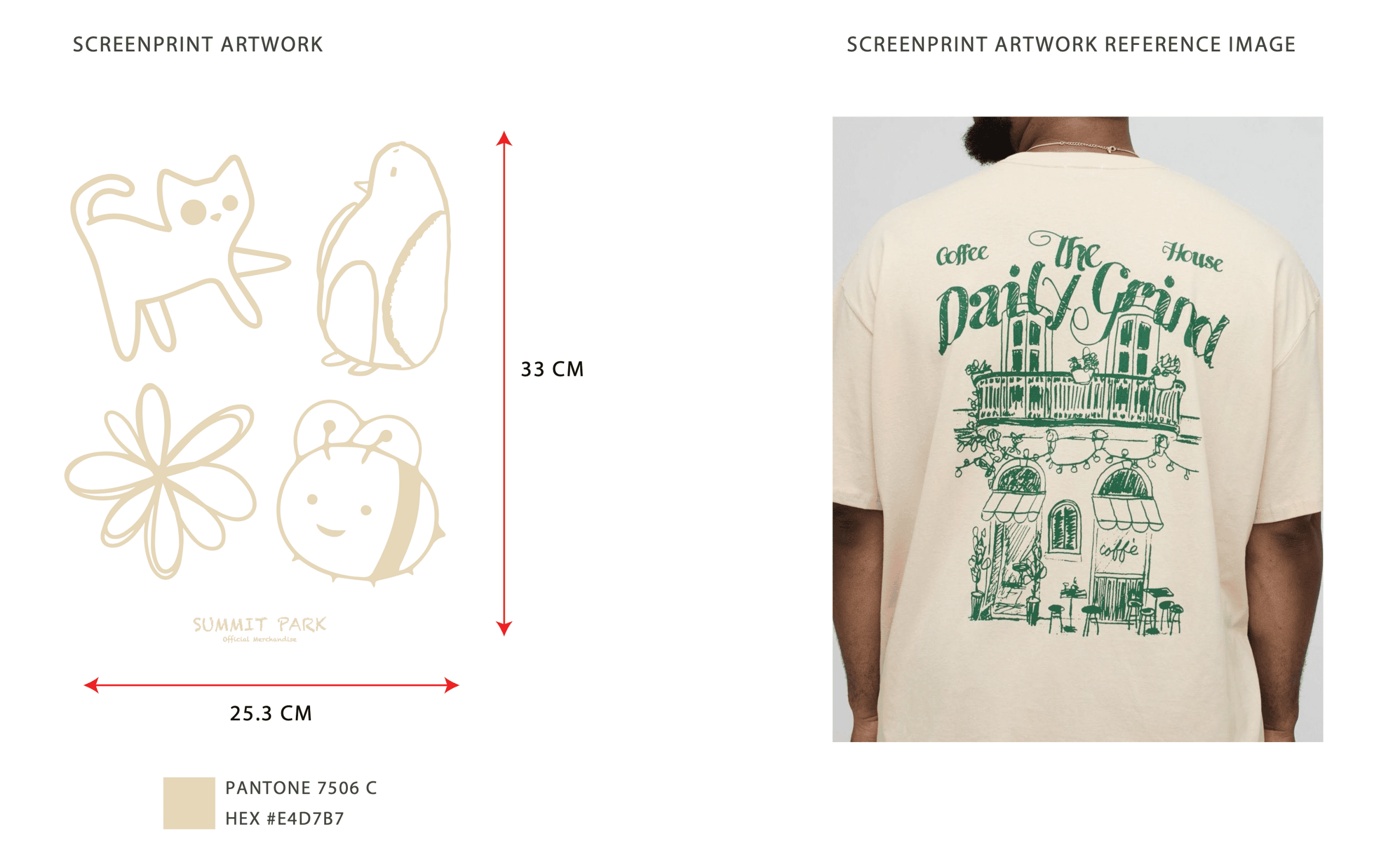
Artwork files (vector format .ai or .eps, not JPEG or PNG), placement dimensions measured from a consistent reference point (e.g. “centre chest, 8cm from HPS (Highest point on shoulder)”), colour codes for each element of the artwork, decoration method (screen print, DTG, embroidery, woven badge, heat transfer, rubber patch), and any special instructions like print inks, hand feel or embroidery type.
What we see brands get wrong: Sending low-resolution artwork files and trusting the factory to redraw them. Please always supply vector files. Always.
7. Label, care label and packaging instructions
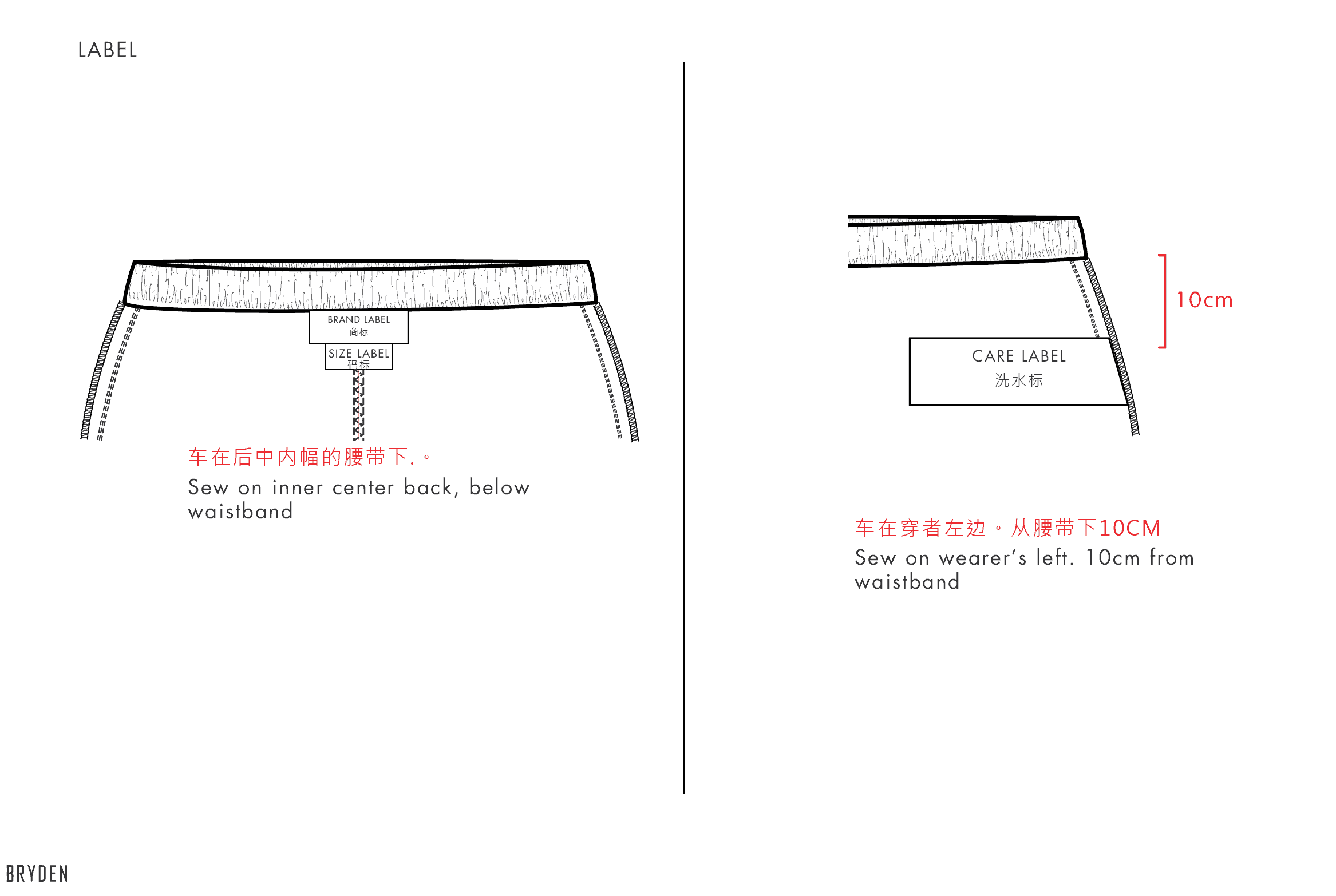
Woven label and care label content (fibre composition, washing instructions in the correct format for your target markets), label placement and attachment method, swing tag design and attachment, polybag dimensions and fold method, and any special packaging requirements, tissue paper, stickers, inner cardboard, hangers.
For brands selling into regulated markets (EU, US, UK), fibre composition and care instruction labelling has specific legal requirements. Your tech pack should comply with the standards of your primary market as otherwise the customs will hold up the shipments.
8. Quality control standards and tolerances
Acceptable and unacceptable defect classifications, measurement tolerances by POM, colour matching standards (typically within one shade on the Pantone scale), and any brand-specific quality checkpoints. This section becomes the reference document for our QC team during inline and final inspection.
What factories actually need and where most brands fall short
Here’s what our 13 years of factory-side production has taught us about tech packs.
Reputable factories will decline your order if your tech pack is incomplete. This isn’t gatekeeping, it’s self-protection. A factory that quotes and samples from an incomplete brief will either produce something wrong or spend weeks clarifying details that should have been documented upfront. Good factories don’t have time for that, and neither do you.
The most common problems we see:
Incomplete BOMs are the single biggest source of sampling errors. Brands specify the main fabric but skip thread colour, zipper grade, and label content. The factory makes assumptions about the fabric GSM. The assumptions are wrong, and the prices increases. And you think the factory is trying to over charge but the thicker fabric you wanted are more expensive.
Missing size grading means every size beyond your base is guesswork. If you only provide measurements for a Medium, your XS and XL are being graded by a factory technician who doesn’t know your target fit and won’t tell you until you receive the bulk order. We suggest to indicate the market and state that if it’s supposed to be a slim fit, normal fit or oversized fit.
No Pantone references means colour is subjective. What you see on screen and what arrives in a carton can be entirely different. This is especially problematic for corporate and branded merchandise where colour accuracy is non-negotiable, something our big clients know well and will not accept.
Artwork files in the wrong format add 3–5 days to every round of sampling while the factory waits for a redrawn file. Send vector files the first time to avoid wasting time and missing out on deadlines.
No tolerance specs means you have no contractual basis to reject out-of-spec bulk production. If your spec sheet says “chest: 54cm” with no tolerance, a factory delivering 52cm units can argue the order is acceptable.
How our tech pack service works
At Bryden, tech pack creation is part of our full-package manufacturing service.
Here’s how it works in practice:
1. You send us your brief. Sketches, reference images, fabric swatches, or just a clear description of what you want to make. The more detail you have, the faster we move. But if all you have is a concept and a reference garment, we can work with that too.
2. Our design team develops your tech pack. We draft your flat sketches, advise & specify your BOM based on your fabric preference / selection, build out your measurement spec, and document your construction details. For corporate and branded merchandise orders, we cross-reference your brand guidelines to ensure colour accuracy.
3. We send you the tech pack for sign-off. You review, request changes, and approve. This stage typically takes one to two rounds of revision. Once you sign off, we treat the tech pack as the agreed specification, it’s your protection and ours.
4. We translate and hand off to the factory in Chinese. Our tech packs are bilingual as standard, English for your records, Chinese for the factory floor. This eliminates translation errors at the production stage, which is one of the most common sources of sampling problems for brands working with China-based factories without a local intermediary.
5. Sampling proceeds against the approved tech pack. Our QC team uses it as the reference document at every stage: pre-production, inline, and final inspection.
Certifications available across our factory network: GOTS (organic textiles), GRS (recycled content), OEKO-TEX Standard 100 (chemical safety), FSC (packaging). If your brand has sustainability certification requirements, we can match your order to the appropriate certified factory.
MOQ: 480–500 pieces per collection (80–100 pieces per colour per design).
Don’t have a tech pack yet? Send us your designs and we’ll handle it. Most clients start with nothing more than a sketch and a reference garment. [Get In Touch →]
Tech pack examples: What we’ve produced for clients
Our tech packs span everything from technical performance apparel to resort collections to corporate merchandise. A few examples of the range:
Zoos/ Theme Parks — Branded merchandise and uniform ranges. Precise Pantone matching across multiple colourways, with label content compliant for Singapore retail. Tech packs produced bilingually for our China factory partners.
Hotel / Resorts — Resort retail shop collections. Construction-heavy tech packs covering woven & knit fabrics, complex seam structures, different decoration types and multi-component garments with exacting QC tolerances.
Fashion Brands — Fashion-forward collection garments with detailed flat sketches, custom trim specifications, and full BOM documentation for our GOTS-certified factory partners.
We don’t share client tech packs for confidentiality reasons, your IP is protected with us, as it is for all our clients. But if you want to see the format and level of detail we work to, get in touch and we’ll walk you through a sample.
Frequently asked questions
How much does a tech pack cost?
If you’re looking for standalone tech pack creation without production, costs in the industry typically range from USD $150 to $1500 per style depending on complexity. Simple garments (basic tee, shorts) sit at the lower end; complex multi-panel technical garments or outerwear sit at the higher end.
At Bryden, tech pack creation is available as a standalone service or included as part of our full-package production service. Standalone pricing starts from SGD $100 for flat sketches up to SGD $300 for complex technical garments.
Can you create a tech pack from just a sketch or reference garment?
Yes. Most of our clients start without a completed tech pack. If you have a clear sketch or a physical reference sample, our design team can build the tech pack from there. The more detail you provide upfront like fabric preferences, fit references, sizing etc, the fewer rounds of revision you’ll need.
Do I need a tech pack for a small order?
Definitely yes, especially for a small order, where you have less margin to absorb sampling errors. The investment in a proper tech pack upfront saves money on sampling revisions, which are billed per round. Brands that skip the tech pack typically spend more money and time correcting the samples than they would have spent on the tech pack in the first place.
What’s the difference between a tech pack and a spec sheet?
A spec sheet (or specification sheet) is one component of a tech pack, specifically the measurement specification. A full tech pack includes the spec sheet plus flat sketches, BOM, colourways, construction notes, artwork files, label instructions, and QC standards. Some people use “spec sheet” and “tech pack” interchangeably, but a spec sheet alone is not sufficient to manufacture a garment.
What file format should my artwork be in?
Vector format which are Adobe Illustrator (.ai) or Encapsulated PostScript (.eps). Not JPEG, not PNG, not PDF (unless exported as vector from Illustrator). Raster files cannot be scaled without quality loss and cannot be colour-separated for screen printing or embroidery digitisation. If you only have raster artwork, let us know and we can advise on redrawing options.
How long does it take to produce a tech pack?
For a straightforward garment with clear brief materials, our design team typically completes a tech pack within 5–7 business days. Complex garments with multiple components, custom trims, or detailed construction requirements may take 10–14 business days. Tech pack development runs in parallel with fabric sourcing, so it doesn’t add to your overall lead time in most cases.
Can I provide my own tech pack?
Absolutely. If you already have a tech pack, send it to us as part of your brief. We’ll review it, flag anything missing or unclear, and confirm whether it’s production-ready before we proceed to sampling. Most client-provided tech packs need minor additions like missing tolerances, incomplete BOM, or artwork in the wrong format.
Ready to get your garments made?
Send us your designs, be it sketches, reference images, or a completed tech pack and we’ll come back to you with a production brief and quote within 2 business days.
We’ve helped over 1,000 brands across 50+ countries take their designs from concept to bulk production. Whether you’re launching your first collection or scaling an existing line, we have the factory network, the certifications, and the experience to get it right.