


How much does it cost to start a clothing brand?
I have been asked this question by prospective brand founders almost every day since we started Bryden Apparel in 2013. And the reason most cost estimates people find online get it wrong is simple: they only account for production. They forget sampling revisions. They forget photography. They forget that a website with a poor theme looks unprofessional. They forget freight costs.
The honest answer is between USD 5,000 and USD 20,000 for a small first collection covering design, tech packs, sampling, and your first bulk production run. The exact figure depends on your garment category, number of styles, order quantities, and whether you work with a full-package manufacturer or coordinate suppliers independently.
By the time the first collection lands, most founders have overspent in some areas and left others underfunded.
We thought it would be great to share with everyone the costs involved in starting a line so that you can budget wisely and know how to sustain it in the long run. In this post, we will touch on some of the initial cost to start a clothing brand.
Note: This is Part 1 of a two-part cost guide. Part 1 covers design, tech packs, sampling, and website setup. Part 2 covers bulk production costs, marketing budgets, and distribution.
Why most founders underestimate their costs
The global apparel market hit USD 1.84 trillion in 2025. That is an enormous market with genuine opportunity for new brands.
But here is the other number: roughly 80% of new clothing brands fail within their first five years. The leading cause is not bad design or weak marketing. It is cash flow mismanagement and that almost always starts with underestimating total launch costs.
At Bryden, we have worked with more than 1,000 brands across 50+ countries. The founders who manage their capital well are almost always the ones who understood the full cost picture before committing to anything.
1. Design & Tech Packs – Cost of starting a clothing line

Typical range: USD 150 to USD 800 per style
Before a manufacturer can produce your garment, you need two things: a design and a tech pack. These are separate deliverables that often require separate specialists.
As mentioned in Starting A Clothing Line – The Basics, if you’re not designing your collection, you will need to hire the appropriate designers. You will need fashion designers to produce sketches, technical drawings, and tech packs. Graphic designers will be required to produce illustrations and pattern designs for prints. This would be one of the first few things you spend on.
Depending on your budget, you can choose to hire in-house designers or freelance designers. Thanks to the Internet, hiring help is easier than ever. On websites like Behance, Fiverr, and Upwork, the cost of a freelance fashion designer could range from $100 to $800. A graphic designer’s salary could range from $100 to $800, depending on their skills and experience.
What does hiring design help actually cost?
Technical designer or fashion designer
Produces flat sketches, graded size specs, and the full tech pack document.
| Experience level | Typical cost per style |
|---|---|
| Entry-level freelancer | USD 50 to USD 100 |
| Mid-level freelancer | USD 100 to USD 250 |
| Experienced specialist | USD 250 to USD 400 |
| Agency or studio | USD 400 to USD 800 |
Graphic designer (for prints, embroideries, and pattern designs)
If your collection includes artwork or pattern repeats, budget separately:
| Deliverable | Typical cost |
|---|---|
| Single print or graphic | USD 50 to USD 150 |
| Pattern repeat | USD 100 to USD 300 |
| Full print placement design | USD 150 to USD 400 |
I will recommend a budget of $300–$500 per design, as that can get you an experienced designer to produce technical drawings and detailed tech packs.
Pro tip from my experience: Do not hire based on price alone. An underspecified tech pack that generates three rounds of sampling corrections will cost more in revision fees than a well-priced experienced designer from the start. Ask to see examples of completed tech packs — not just portfolio design work — before hiring.
What is a tech pack and why does it matter so much?
A tech pack is the specification document at the centre of every clothing manufacturing project. It tells your factory exactly how to build each garment.
I learned the value of this the hard way. Before founding Bryden, when I was manufacturing my own label Ardentees, I submitted garment ideas as rough sketches and verbal descriptions. The samples that came back required multiple correction rounds. Each round added weeks and fees. By the time I understood what a proper tech pack was and why it mattered, I had already paid for that education in wasted sampling costs.
A complete tech pack includes:
- Technical flat sketches: front, back, and key detail views
- Graded measurements across all sizes in your range
- Fabric composition and weight (GSM for knit fabrics; denier for woven fabrics)
- Trim and hardware specifications
- Stitch type per seam: flatlock, overlock, bonded seam, lockstitch
- Label, hang tag, and branding placement
- Colourway references using Pantone codes or physical swatches
Without a complete tech pack, a manufacturer cannot quote you accurately, cannot produce a correct first sample, and cannot maintain quality consistency across a bulk run. Brands that submit incomplete tech packs spend significantly more on sampling revisions than the tech pack itself would have cost.
Tech pack completeness checklist
Before submitting to any manufacturer:
- All seam types specified, not just illustrated
- Measurements graded across every size, not just the base size
- Fabric weight confirmed: GSM for knits, denier for wovens
- All trims referenced with enough detail to source or match
- Colourways confirmed with Pantone codes or physical swatches
- Label content and placement clearly marked on sketch
- Branding details fully specified: embroidery, screen print, woven label
Do take into consideration the complexity of designs as well; if you need complex and intricate styles, these will likely come at a higher charge.
At Bryden Apparel, we include tech pack development as part of our production service for brands that do not have a technical design team, which removes this coordination step and the associated risk of incomplete specifications.
2. Product Development and Sampling

Typical range: USD 100 to USD 1,000 per style, per round
After your designs are ready, you will need to produce the collection. You’re going to have to develop patterns, source and buy fabrics. You will also need trims and notions for your designs.
Different types of garments have different complexities and, thus, different costs. The cost of making a printed winter jacket is higher than a t-shirt with a graphic print.
Most collections require two to three rounds before bulk production is approved.
How much does it cost to produce samples?
You can expect to pay $100–$1000 for samples, and this cost depends on what help you need. Some pattern makers may only provide help with pattern making alone, while others will help with grading and sewing the garment. Other service providers may provide an all-in-one package, which can be cheaper.
Sourcing for fabrics, trims, and notions is a tedious process and can cost a fair bit, whether you’re doing it on your own or engaging third-party help. Additionally, the type of fabric, trims, notions, and extent of customization (if any) will add to your costs.
The three sampling stages you need to be aware of
Proto sample
Confirms basic construction and silhouette. Often made in a substitute fabric if your specified fabric is not yet in stock. The goal is to identify major construction or fit issues before correct fabric is committed.
Fit sample
Made in correct fabric with proto corrections incorporated. This is the sample that gets worn and measured against your size spec in detail. Every fit issue — shoulder placement, chest ease, hem drop, sleeve length — gets identified and corrected here.
Pre-production sample (PPS)
Made exactly as bulk will be produced: correct fabric, correct trims, correct construction, correct labels. This is the final sign-off before bulk production begins.
Important: Never approve bulk production from a fit sample. In our experience at Bryden, skipping the PPS is the most common shortcut that produces bulk orders with unresolved issues. Correcting those issues in bulk always costs more than an additional sampling round.
What drives sampling cost up?
| Factor | Impact on cost |
|---|---|
| Garment complexity | High – a structured jacket costs more to sample than a t-shirt |
| Number of revision rounds | High – each round adds time and direct cost |
| Fabric sourcing (if not included) | Medium — coordinating independently adds logistics cost |
| Courier costs for swatches and samples | Low to medium |
Typical sampling timelines
| Stage | Lead time |
|---|---|
| Proto sample | 2 to 4 weeks |
| Fit sample after corrections confirmed | 2 to 3 weeks |
| Pre-production sample after fit approval | 2 to 3 weeks |
| Total from tech pack to PPS approval | 8 to 14 weeks |
Build this into your launch planning. In twelve years of working with brands, sampling almost always takes longer than founders expect. Rushing it is the fastest way to produce a substandard bulk order.
Fabric sourcing at the sampling stage
Before sampling begins, fabrics, trims, and notions need to be confirmed. If your manufacturer does not include fabric sourcing as part of their service, you will need to coordinate this independently.
From our experience in helping brands from London, New York, and Los Angeles, these places have local fabric markets with a good range of fabrics. I will suggest going to your local fabric markets to get cutouts of the fabrics you want and sending them to your overseas manufacturer to help you source the fabrics.
This way, you can ensure that the fabrics you like will be easily matched by your manufacturer, and you won’t end up spending extra time and money to get the fabrics right.
Sourcing shipping costs when starting your clothing label
In the early phase of setting up my t-shirt label, I incurred a lot of shipping cost to start a clothing brand because my manufacturer didn’t offer help with fabric sourcing. After all, they found it a hassle. I had to source fabrics from different suppliers who shipped from different locations, which raked up my courier costs.
At that point, I was thinking, “It would be so wonderful if my manufacturer could provide me with a range of fabrics and combine them to send to me. That will allow me to save on all the shipping charges that are piling up and will be so convenient!”
That experience inspired me to offer our clients the convenience of having fabric options, sourcing, and customization as part of Bryden’s service.
Finding a manufacturing partner
After this sourcing phase is finalized, the next step will be to find a manufacturing partner. One of the key things to consider when finding a suitable manufacturer is finding one that can communicate well and understand your ideas.
For my label, I had to travel overseas many times to meet my supplier due to the many errors in sampling. The traveling incurred a hefty expense for me, which was tough for a start-up brand but was necessary to get things moving. So bear in mind the costs of traveling if you decide to go with an overseas manufacturer.
Cost of sampling
Once you’ve settled on a manufacturer, you will move on to sampling. During this phase, you will test if the chosen fabrics, trims, and notions work on the final garment and if the workmanship of the factory you’ve selected is satisfactory. An average of two samples is usually required before moving on to the bulk order stage.
Pro Tip: Choose a partner that can help with your sourcing, tech packs, sampling, and customization to keep your cost to start a clothing brand low.
3. Website and e-commerce setup
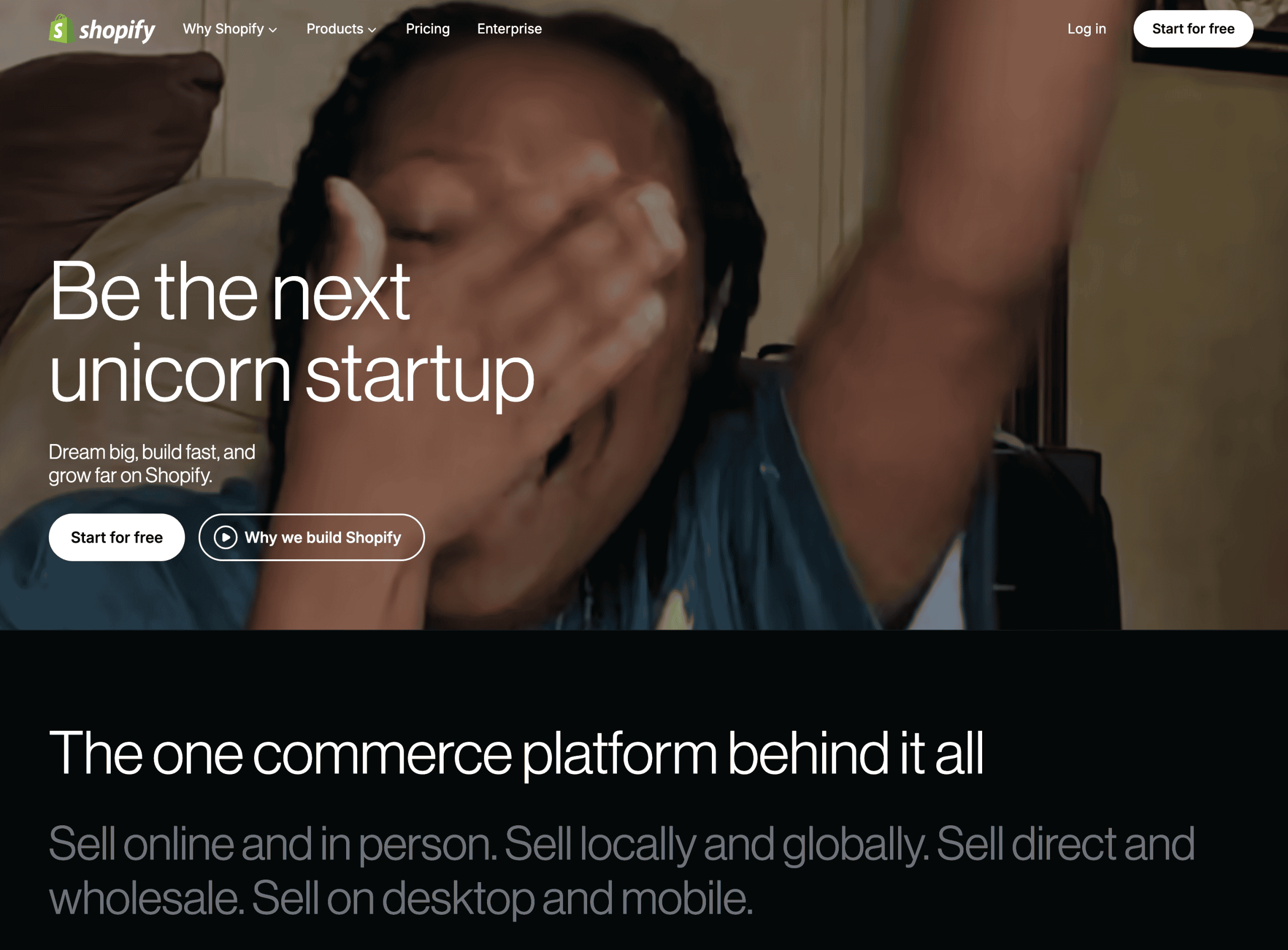
Typical range: USD 300 to USD 5,000
Domains: $10 per domain
Hosting: $29 – $79 per month
A clothing brand without an owned web presence has no credible sales channel and no anchor for press, wholesale buyers, or repeat customers. For a first-stage brand, a clean, fast e-commerce site is enough. You do not need a custom-built platform to launch.
Ask yourself this question: How many times were you tempted to walk into a store that has a beautifully designed space?
Apply the same logic when creating your website, as it serves as your storefront. It’s imperative to remember that an online shopper’s attention is even shorter than in a physical store, so you have to bait them well.
Platform comparison
| Platform | Best for | Approx. first-year cost | Strengths |
|---|---|---|---|
| Shopify Basic | Most clothing brands | USD 400 to USD 600 | Strongest app ecosystem, best for scaling |
| Squarespace | Design-forward brands, simpler inventory | USD 300 to USD 550 | Beautiful templates, easy to use |
| BigCommerce | Brands planning high SKU volume | USD 400 to USD 900 | Powerful built-in features |
| WooCommerce | Brands with developer support | USD 200 to USD 500 | Fully customisable |
Shopify has the strongest ecosystem of third-party integrations for inventory management, email marketing, fulfilment, and analytics. For most new clothing brands, it is the most practical starting point.
Domain and hosting cost breakdown:
| Item | Typical cost |
|---|---|
| Domain registration | USD 10 to USD 15 per year |
| Shopify Basic plan | USD 29 per month |
| Premium theme (one-time) | USD 150 to USD 350 |
| Apps: email, reviews, upsell | USD 20 to USD 80 per month |
Pro tip: Do not over-invest in the website before you have proven product-market fit. A clean, well-photographed Shopify store with a strong theme and great product imagery outperforms an elaborate custom site with weak photography every time.
Cost centre 4: Product photography
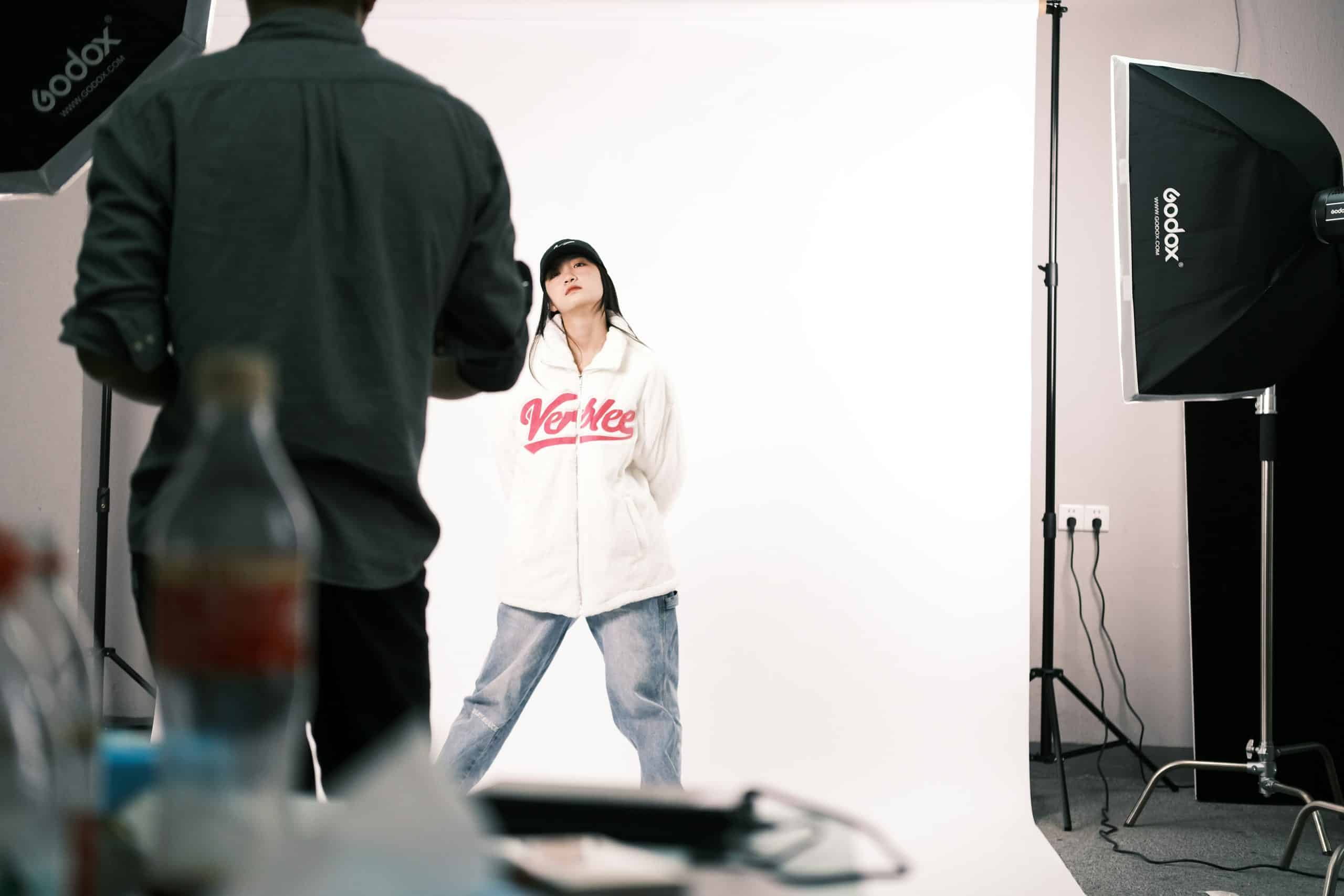
Typical range: USD 500 to USD 3,000 per shoot
Photography is the most under budgeted line item for new clothing brands. Poor product photography undermines an otherwise strong product faster than almost anything else.
You need two types of imagery for a clothing launch.
E-commerce product shots: Clean background, multiple angles, detail shots. These are the images on your product pages. They need to be consistent, accurate to colour, and show construction detail clearly.
Lifestyle or editorial shots: Worn on real people in a relevant context. These are for social media, email, press, and brand storytelling. They communicate what the brand feels like, not just what the product looks like.
What does a shoot cost in practice?
| Shoot type | Typical cost range |
|---|---|
| Product flat lay or ghost mannequin only | USD 80 to USD 800 |
| Half-day studio shoot, photographer only | USD 500 to USD 1,200 |
| Half-day studio shoot with photographer and model | USD 800 to USD 2,500 |
| Full-day shoot with photographer, model, and stylist | USD 2,000 to USD 5,000 |
At Bryden Apparel, we offer e-commerce photography as an add-on service after bulk delivery which simplifies logistics for brands that are not based near a major photography market.
The full cost summary
Here is what a realistic first collection budget looks like across two scenarios:
| Cost centre | Conservative | Invested |
|---|---|---|
| Design and tech packs (3 styles) | USD 450 | USD 2,400 |
| Sampling (3 styles, 2 rounds each) | USD 600 | USD 6,000 |
| Bulk production (see Part 2) | USD 3,000 | USD 15,000 |
| Website and e-commerce setup | USD 400 | USD 2,000 |
| Product photography | USD 500 | USD 2,500 |
| Total | USD 4,950 | USD 27,900 |
Bulk production costs, marketing budgets, and distribution costs are covered in Part 2 of this guide.
Frequently asked questions
How much money do I need to start a small clothing brand? A realistic minimum budget for a small first collection: 3 styles, roughly 100 to 150 pieces per style is USD 5,000 to USD 10,000. This covers design, tech packs, sampling, and a modest first bulk run. Marketing and website costs are additional.
What is the cheapest way to start a clothing line? Starting with a print-on-blank model has the lowest upfront cost and no sampling fees, but gives you very limited control over fit, fabric, and construction. For brands where the product itself is a differentiator, cut-and-sew manufacturing with a low-MOQ manufacturer is a better long-term approach.
Do I need to pay for sampling separately from bulk production? Yes. Sampling fees are separate from bulk production costs at virtually all manufacturers. They cover the factory’s time to produce and revise prototypes based on your tech pack. Some manufacturers, including Bryden Apparel, offset sampling costs against your first bulk order invoice once production is confirmed.
How many styles should I start with to keep costs manageable? Three to five styles is the practical range for a first collection. More styles multiply your sampling costs and bulk production commitment before you have any market data. Starting focused lets you read demand and scale into new styles with evidence behind the decision.
How do I keep my total start-up cost low without cutting corners? Work with a full-package manufacturer who handles fabric sourcing and sampling coordination. This reduces travel, logistics, and revision costs significantly. Invest in an experienced technical designer for correct tech packs from the first submission. And start with a tight range of styles rather than a broad collection. These three decisions have the biggest combined impact on total launch cost.
Getting your production costs right from the start
The cost of starting a clothing brand is heavily influenced by who you manufacture with. A manufacturing partner who handles fabric sourcing, tech pack development, sampling, quality control, and delivery under one roof reduces both your direct costs and the coordination overhead that quietly adds up in time and mistakes.
Bryden Apparel is a Singapore & China based full-package custom clothing manufacturer. MOQ starts at 80-100 pieces per colour per design with a 480-500-piece total order minimum designed to make professional manufacturing accessible for brands producing their first collection.
Get in touch with Bryden Apparel to discuss your project and get a quote for your collection.


One Reply to “How Much Do I Need To Start My Clothing Line? (Part 1/2)”
Very informative article! Says a lot about a company that cares to share its own experiences to help others!