Socks are one of the most underestimated additions to a clothing brand’s collection. They’re high-repeat purchase items, people wear them often, carry strong branding opportunities, and work across almost every brand category from sportswear and streetwear to corporate merchandise and outdoor apparel. Yet most brand owners don’t know where to start when it comes to adding socks to their range.
There are more types of socks for clothing brands than most people realise and choosing the wrong one for your collection is a more expensive mistake than it sounds.
This guide covers the 10 types of socks brands produce most, what makes each style distinct, which fabrics work best, and which brand categories they suit.
Quick Reference: Types of Socks at a Glance
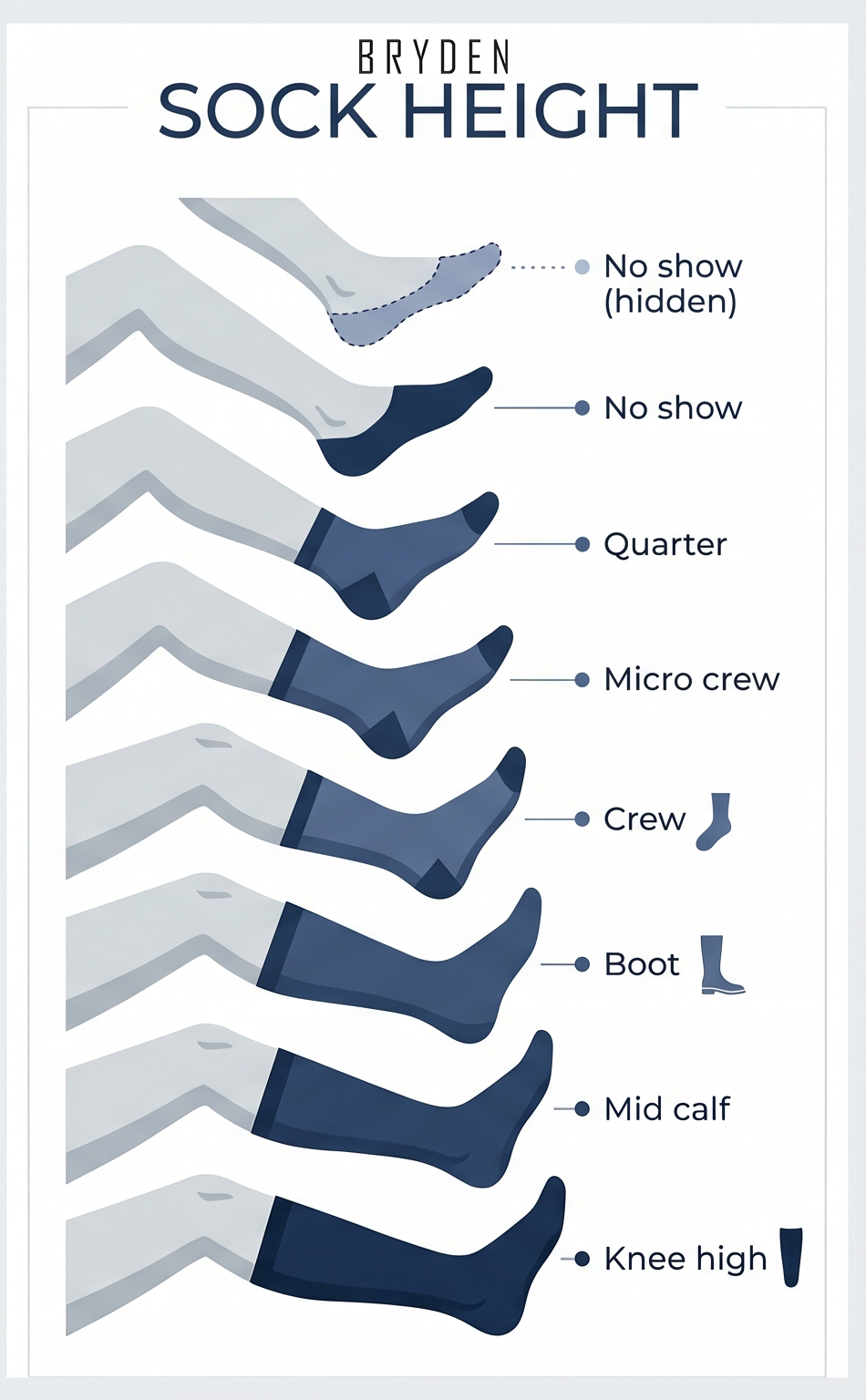
| Sock Type | Length | Best Fabric | Best For |
|---|---|---|---|
| Athletic / Sports | Crew or ankle | Polyester-spandex | Sports and fitness brands |
| Compression | Knee-high | Nylon-spandex | Running, cycling, wellness brands |
| Crew | Mid-calf | Cotton-polyester | Any brand category |
| Ankle | Just above shoe | Cotton-spandex | Activewear, athleisure |
| No-Show | Below shoe line | Cotton-spandex | Fashion, lifestyle, trainers |
| Quarter | Above ankle | Polyester-nylon | Running, tennis, outdoor |
| Knee-High | Below knee | Cotton-polyester | Sports teams, streetwear |
| Novelty / Fashion | Crew or knee-high | Cotton-polyester | Streetwear, corporate gifting |
| Trainer Liners | Ultra-low | Bamboo-cotton | Trainer-focused lifestyle brands |
| Outdoor / Hiking | Crew or quarter | Merino wool-nylon | Outdoor and adventure brands |
1. Athletic / Sports Socks
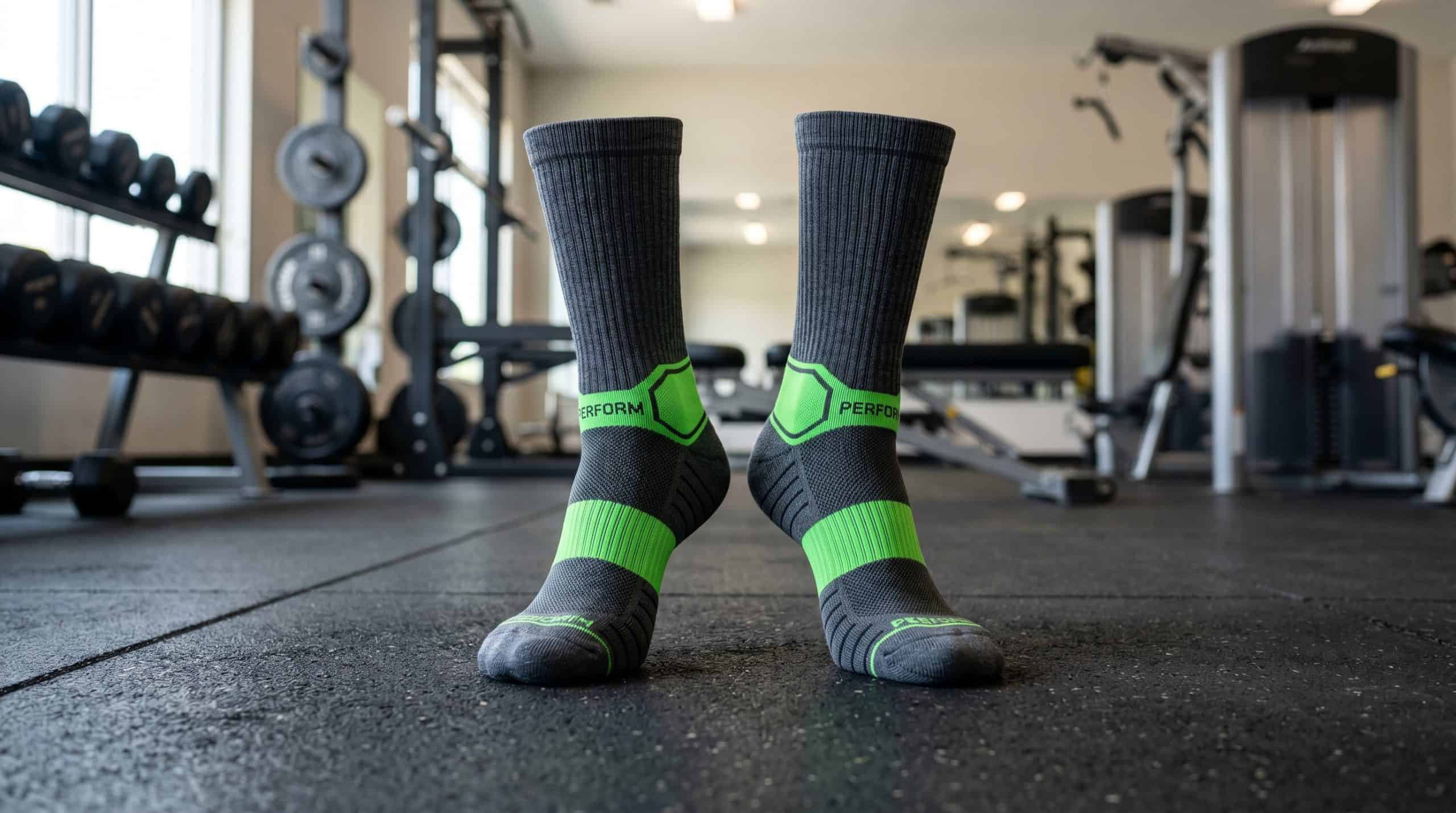
Athletic socks are the most widely manufactured sock type for clothing brands. Designed for performance, they prioritise moisture management, cushioning, and durability over extended wear. The key technical features are arch support panels, reinforced heel and toe zones, and moisture-wicking fabric blends typically in polyester, nylon, or a cotton-polyester mix.
Athletic socks work across crew, ankle, and quarter lengths depending on the sport. Running brands typically go with ankle or quarter. Football and team sports brands use crew or knee high. If you are not sure which length suits your customer, start with crew. It covers the widest range of use cases and leaves room to expand the range later.
Performance athletic socks use terry loop cushioning in the heel and ball of the foot to absorb impact. This is visible in the knit structure when you turn the sock inside out. If you cannot see distinct cushioning zones, the sock is not a performance athletic sock regardless of what the spec sheet says. Brands should always request a cross section of the footbed during sampling and confirm the cushioning placement matches their tech pack before approving bulk production.
For brands: Sports and fitness brands, gym apparel labels, and activewear collections. Athletic socks are a natural extension of any performance apparel line and one of the highest-volume sock categories in the market.
Recommended fabrics: Polyester-spandex blend, nylon-cotton blend, Coolmax performance fibres.
2. Compression Socks
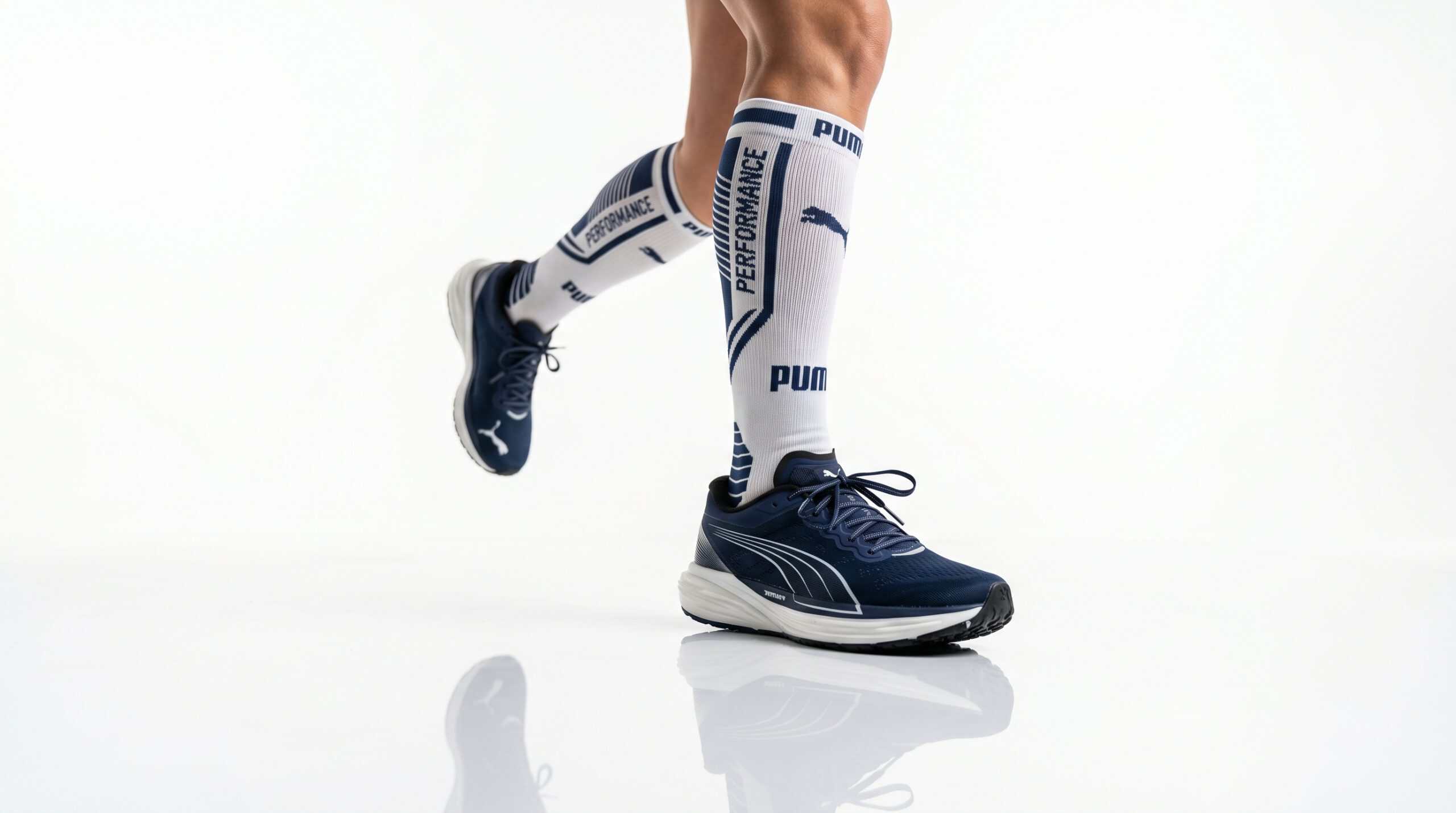
Compression socks are one of the most misunderstood types of socks in the market. Brands often assume that a tight knit equals compression. It does not. True graduated compression applies the most pressure at the ankle and reduces progressively toward the knee. Without that graduation, the sock is just a snug sock. It will not improve circulation, it will not reduce fatigue, and if a customer knows what they are looking for, they will know immediately that it is not a real compression product.
Not every sock factory can produce graduated compression. The knitting machines need to be calibrated specifically for it, and the QC process needs to verify the pressure gradient across the sock, not just the finished dimensions. Before committing to a compression sock production run, confirm with your manufacturer that they have this capability and ask to see compression test results from a previous production run.
For brands: Athletic brands targeting runners, cyclists, and gym enthusiasts. Also strong for corporate wellness brands and travel-focused lifestyle labels. Compression socks command a premium price point and have strong repeat purchase rates.
Recommended fabrics: Nylon-spandex blend, elastane-heavy knit structures. Compression level is determined by the tightness of the knit, not just the fabric.
3. Crew Socks
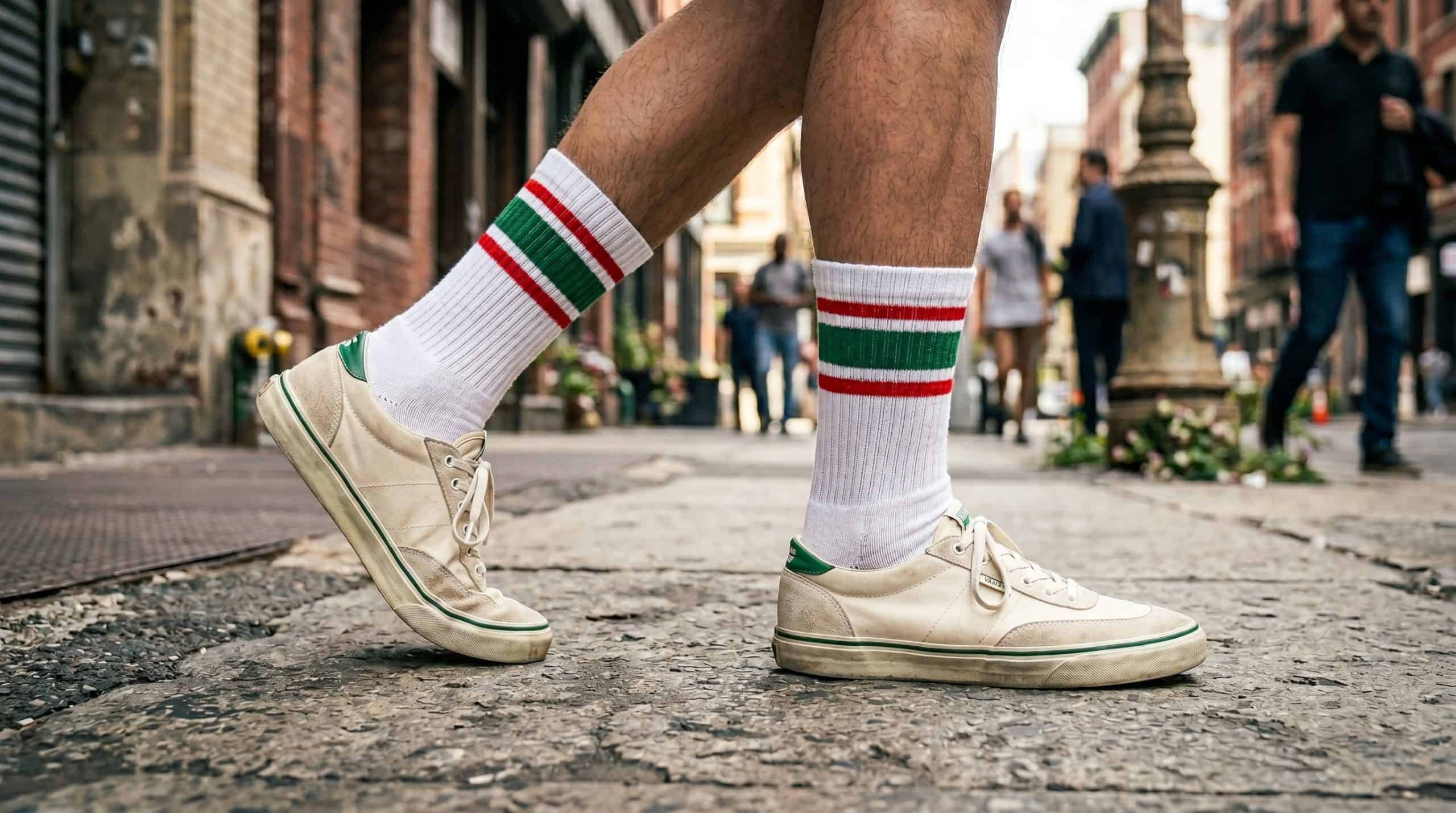
Crew socks sit mid-calf which is the classic sock length that works across almost every brand category. They offer a large canvas for branding, colour blocking, and pattern work, making them one of the most popular sock types for fashion, streetwear, and corporate brands. Their versatility makes them the best starting point for any brand adding socks to their collection for the first time.
For brands: Streetwear and fashion brands, corporate merchandise, sports teams, and outdoor brands. Crew socks are the default starting point for any brand entering the sock category for the first time.
Recommended fabrics: Cotton-polyester blend for fashion and corporate. Merino wool or wool-nylon blend for outdoor and premium lifestyle brands.
4. Ankle Socks
Ankle socks sit just above the shoe line and are particularly popular in activewear, casual wear, and summer collections. They’re a cleaner, minimal look compared to crew socks and suit brands with a streamlined aesthetic. The shorter length means less surface area for branding, so logo placement on the tongue tab or heel becomes more important.
For brands: Activewear brands, athleisure labels, tennis and golf brands, and minimalist fashion collections. Ankle socks pair naturally with trainers and low-top shoes, making them a strong choice for brands in the lifestyle and sportswear space.
Recommended fabrics: Cotton-spandex for everyday wear. Polyester-nylon blend for performance versions.
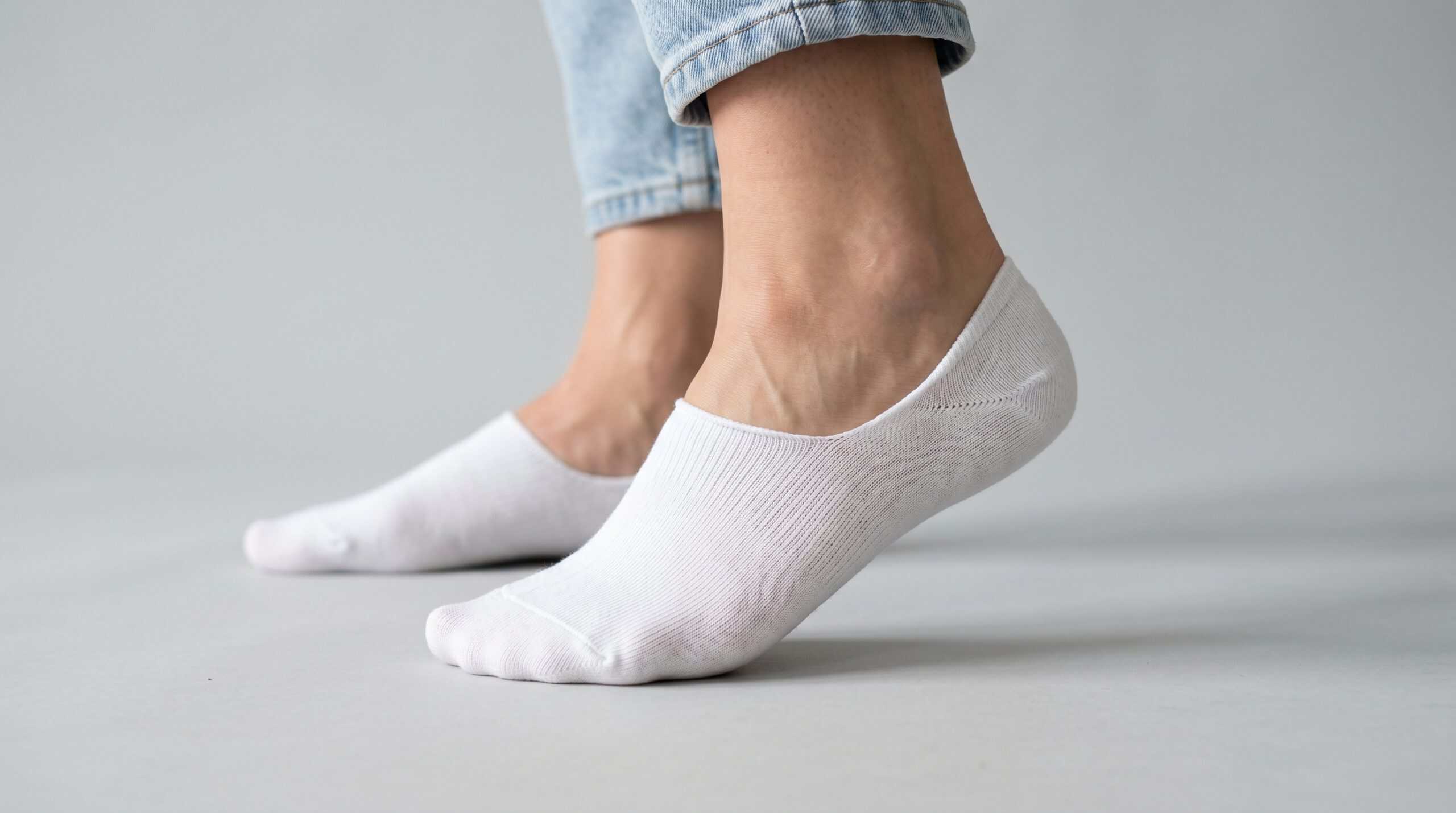
5. No-Show Socks
No-show socks sit below the shoe line and are designed to be invisible when worn with low-cut trainers and loafers. They are also are the product that generates the most customer complaints in the sock category, almost always for the same reason: they fall off.
The silicone grip strip at the heel is what prevents this, and it is the single most important manufacturing detail in the entire product. If the grip strip is too narrow, sits in the wrong position, or is applied with insufficient adhesion, the sock slides down inside the shoe within minutes of wear.
I always recommend that brands test no-show socks for a full day of walking before approving bulk production. Not a quick trial around the office. A full day. The failure point is usually not immediate. It shows up after two or three hours when the grip fatigues and stops holding against the heel lining of the shoe.
Branding options on no-show socks are limited by the surface area. A small woven logo at the toe or a printed insole label are the most practical approaches. Some brands add a small decorative tab at the back of the heel that sits just above the shoe collar, which creates a visible branding moment without changing the no-show profile. If you are considering this detail, it needs to be in the tech pack from the start as it affects the pattern and knit structure.
For brands: Fashion and lifestyle brands, premium basics labels, and any brand whose customers wear trainers or slip-on shoes. No-show socks are a small but high-value addition to a brand’s accessory range.
Recommended fabrics: Cotton-spandex or bamboo-spandex blend. The silicone heel grip is a non-negotiable manufacturing detail.
6. Quarter Socks
Quarter socks sit just above the ankle, slightly higher than ankle socks but below the crew length. They’re popular in sports and outdoor categories because they provide slightly more coverage and cushioning than ankle socks while staying out of sight under mid-cut shoes and boots. Often used in running, tennis, and hiking contexts.
For brands: Running brands, tennis and racket sports brands, outdoor and hiking labels. Quarter socks fill the gap between ankle and crew for performance-focused collections.
Recommended fabrics: Polyester-nylon blend with cushioned footbed construction.
7. Knee-High Socks
Knee-high socks extend to just below the knee and have strong traction in both sports and fashion categories. In sports, they’re used in football, baseball, and cycling. In fashion and streetwear, they’ve become a statement piece often featuring bold patterns, colour blocking, and branding.
For brands: Sports teams and athletic brands, streetwear and fashion labels, and school or corporate uniform programmes. Knee-high socks are one of the few sock types that work equally well in performance and fashion contexts.
Recommended fabrics: Cotton-polyester blend for fashion. Nylon-spandex for performance and compression versions.
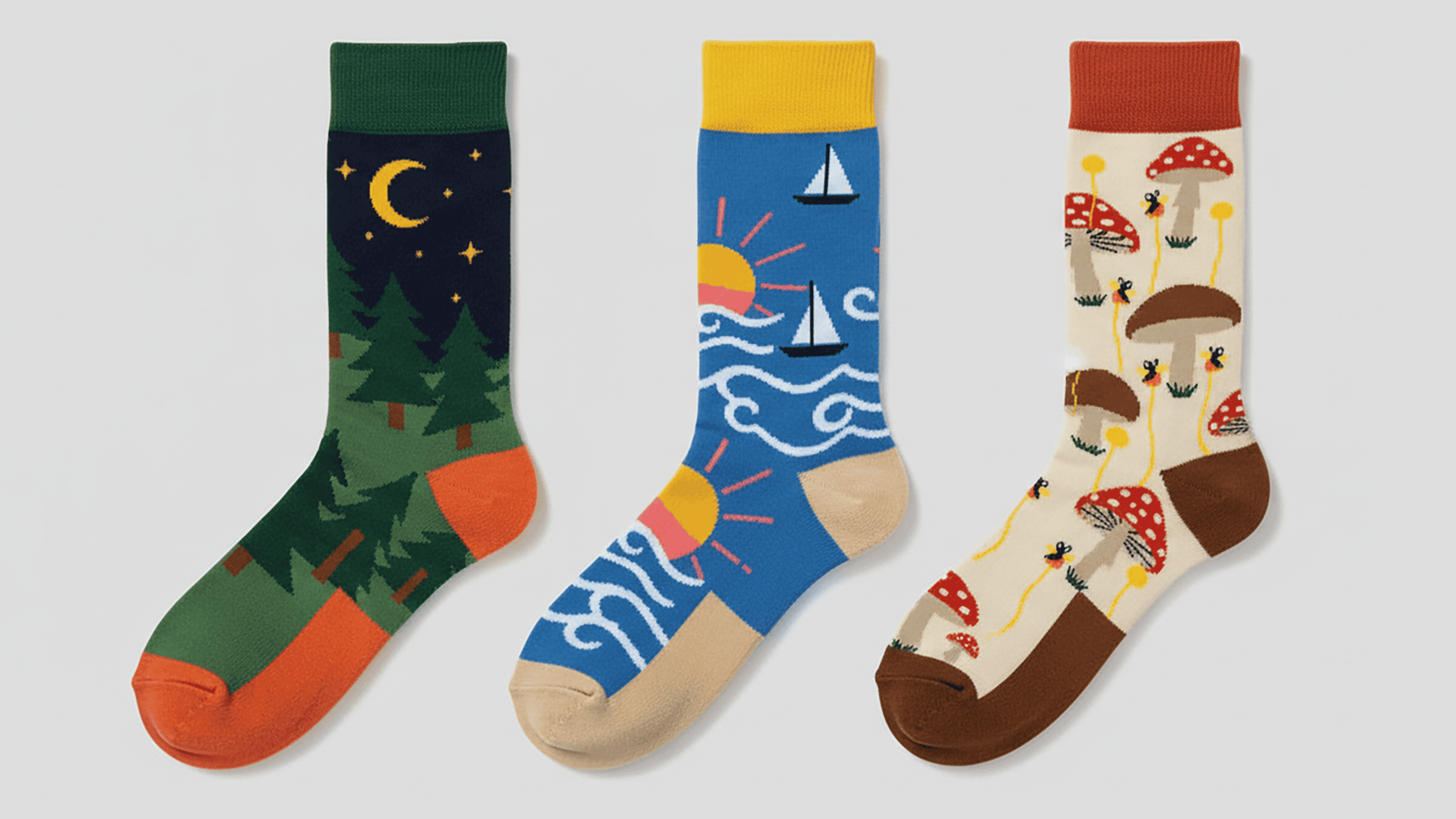
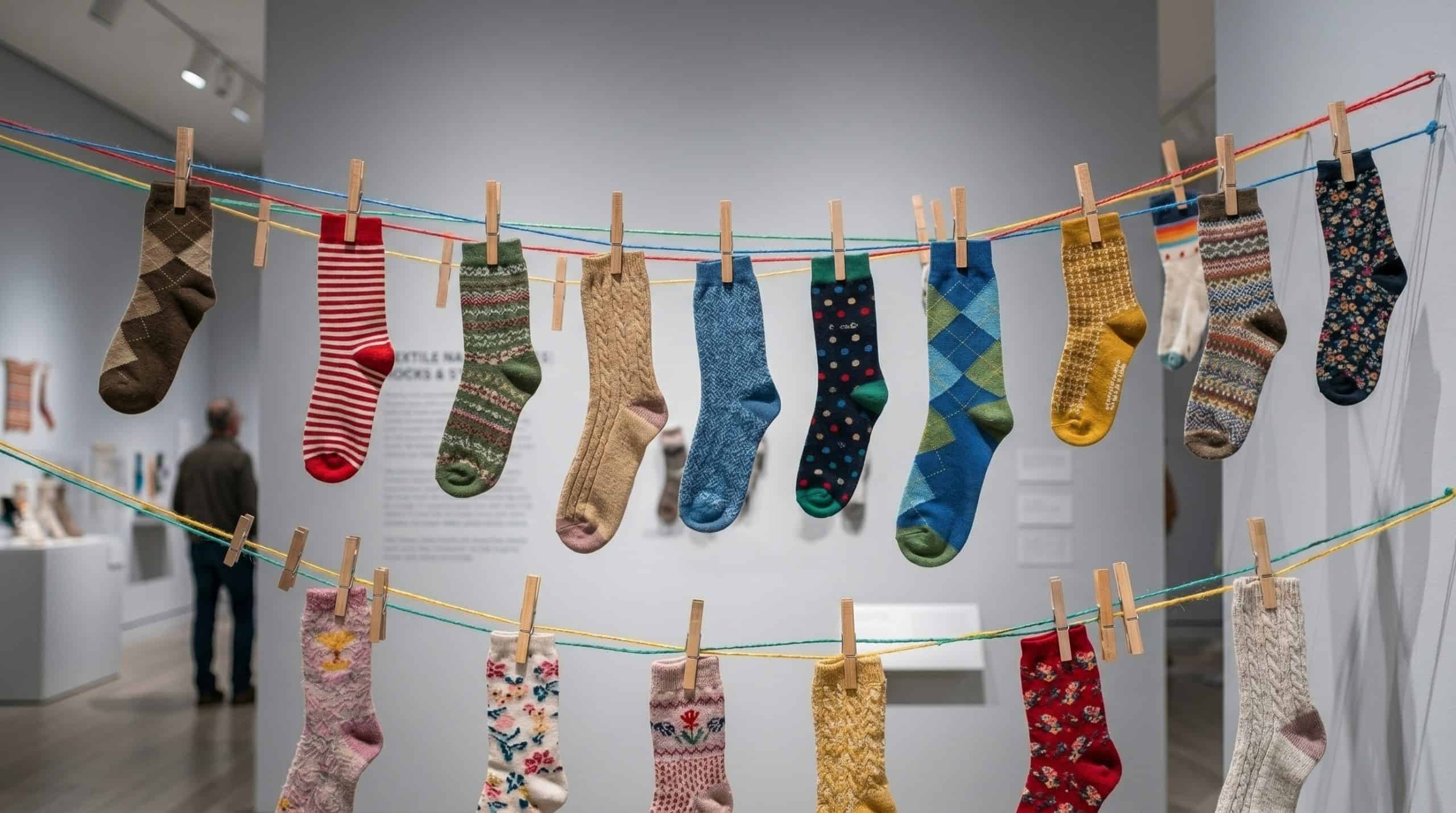
8. Novelty / Fashion Socks
Novelty socks are the easiest type of sock for a brand to add to their collection and the type where the production decision matters most before anything is made. The question every brand needs to answer before sampling is whether to go jacquard or sublimation, and most brands do not fully understand the difference until they have made the wrong choice once.
Jacquard knitting weaves the pattern directly into the sock during production. The design is part of the fabric structure, not applied on top of it. This makes jacquard socks more durable, more premium in hand feel, and better suited to geometric patterns, logos, and colourblock designs. The limitation is colour complexity. Jacquard works best with four to six colours maximum. Beyond that, the knit structure becomes too dense and the design loses definition.
Sublimation printing applies the design on top of a polyester heavy knit after the sock is produced. It can reproduce photographic prints, gradients, and designs with unlimited colours with no loss of detail. The trade-off is durability. Sublimation sits on the surface of the fabric and will fade faster than a jacquard pattern over repeated washing, particularly at friction points like the heel and toe.
For most streetwear and fashion brands, jacquard is the right choice. For corporate merchandise and gifting programmes with complex artwork or brand imagery, sublimation is often more practical.
For brands: Streetwear brands, lifestyle labels, corporate gifting and promotional merchandise. Novelty socks are one of the most accessible sock types for brands entering the category low MOQ, high visual impact, and strong gifting appeal.
Recommended fabrics: Cotton-polyester blend. Sublimation printing requires a polyester-heavy knit to achieve vivid colour reproduction.
9. Trainer Liners
Trainer liners are ultra-low cut socks designed specifically for use with trainers lower than no-show socks and cut to follow the shape of the shoe. They provide a barrier between foot and shoe without being visible at all. The construction challenge is the same as no-show socks silicone heel grip is essential.
For brands: Lifestyle and fashion brands with a trainer-focused aesthetic. Trainer liners are a niche product but a strong fit for brands whose core customer wears trainers exclusively.
Recommended fabrics: Bamboo-cotton blend for softness. Polyester-spandex for performance versions.

10. Outdoor / Hiking Socks
Outdoor socks are engineered for sustained wear in boots and trail shoes cushioned footbeds, reinforced heel and toe zones, and moisture management that works over long periods of activity. Merino wool is the gold standard fabric for this category because of its natural temperature regulation, odour resistance, and softness against the skin. Merino wool used in performance outdoor socks is graded by fibre diameter, the Woolmark Company sets the standards most manufacturers work to.
For brands: Outdoor, hiking, and adventure brands. Outdoor socks command a premium price point and have strong brand loyalty from customers who find a sock they trust tend to repurchase repeatedly.
Recommended fabrics: Merino wool-nylon blend for premium versions. Wool-polyester blend for mid-range outdoor socks.
Which Types of Socks Are Right for Your Brand?
The right sock type for your collection comes down to three things, your brand category, your customer’s primary use case, and your price point. Athletic and crew socks are the best starting point for most brands because they work across the widest range of contexts. Compression and outdoor socks suit specialist brands with a performance-focused customer. Novelty and fashion socks work for any brand looking to add a high-visual, low-risk product to their range.
Ready to add socks to your collection? Bryden Apparel’s socks manufacturer team produces all ten styles covered in this guide from athletic and compression to novelty and outdoor. MOQ from 300 pairs per colour. Get in touch to discuss your project.
Frequently Asked Questions
What is the minimum order for custom socks?
At Bryden, the MOQ is 300 pairs per colour across all sock types. That applies whether you are ordering athletic socks, crew socks, or compression. If you are ordering multiple styles or colourways, each one is treated as a separate SKU with its own MOQ.
Which type of socks should I start with?
Crew socks. They work across every brand category, give you the most surface area for branding and pattern work, and are the most familiar sock length for consumers. Start with a crew sock in your core colourway, see how your customer responds, then expand into other types based on what sells.
Can I order multiple sock types in the same production run?
Yes. Many brands order two or three styles together, for example a crew and an ankle sock in matching colourways for a gym collection, or an athletic and a no-show for a trainer brand. Each style and colourway is a separate SKU with its own MOQ, but they can run in the same production window.
Jacquard or sublimation for a novelty sock?
Jacquard if your design uses fewer than six colours and you want something that holds up over repeated washing. Sublimation if you have complex artwork, photographic prints, or a design with lots of colour gradients. If you are not sure which way to go, send us the artwork and we will tell you which method suits it better before sampling begins.
What fabrics work best for custom branded socks?
It depends on the end use. Fashion and streetwear socks: cotton polyester blend. Performance athletic socks: polyester spandex or nylon cotton. Premium outdoor socks: merino wool nylon blend. Compression socks: nylon spandex with elastane heavy knit construction. We recommend the right blend for each project during the tech pack stage based on the sock type and intended use.
How long does production take?
Standard lead time is 90 to 120 days from tech pack approval to delivery. That includes two rounds of sampling, bulk production, quality control, and shipping.